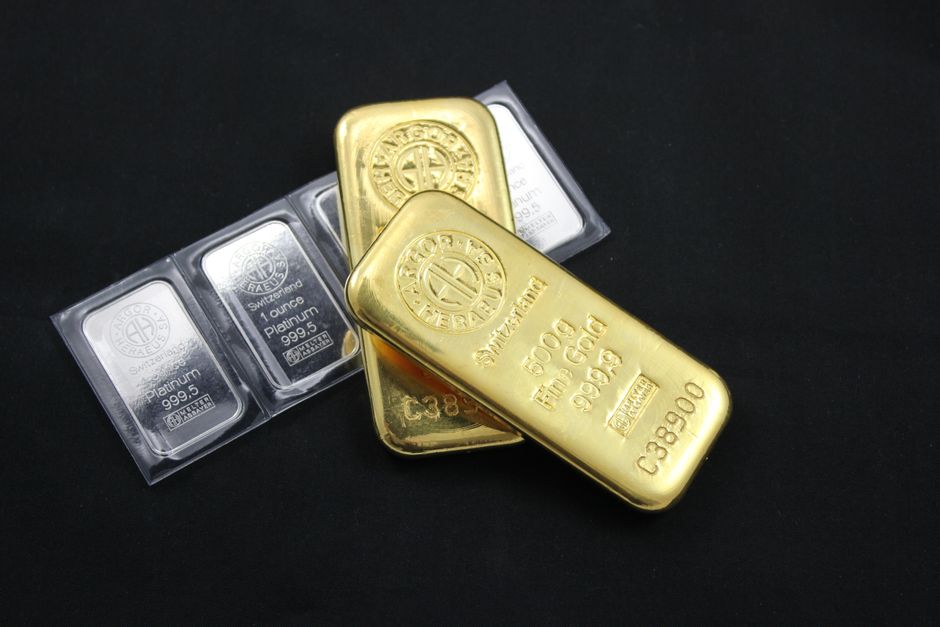
Gold does not pay a dividend. It does not earn interest, it costs money to store, and it just sits there. By the logic of a spreadsheet it is a terrible asset to hold in size. And yet the institutions with the most conservative mandates on earth, central banks, hold thousands of tonnes of it and have been adding more.
That contradiction is worth understanding, because the answer to why central banks buy gold tells you something about the floor under the price. If you trade XAU/USD off a chart, you are trading on top of a very large, very patient buyer who does not care what your indicator says. Knowing that buyer's motives will not time your entries, but it will keep you honest about which direction the long-term wind is blowing.
Gold is nobody's promise
Start with the one property that makes gold different from almost everything else on a central bank's balance sheet. A dollar reserve is a claim on the US government. A euro reserve is a claim on the ECB. A holding of US Treasuries is an IOU that depends entirely on someone else honouring it.
Gold is not a claim on anyone. It has no counterparty, no issuer, and no board that can vote to print more of it overnight. That is the whole point. When a central bank buys gold, it is buying the one reserve asset that keeps its value even if relations with the country that issued its other reserves go sour.
This became very concrete after 2022, when a large chunk of one country's foreign reserves was frozen through sanctions. Every reserve manager on the planet took note. Dollars and euros are useful right up until the moment the issuer decides you cannot use them. Gold in your own vault does not have an off switch.
Reserve diversification, in plain terms
"Reserve diversification" sounds like jargon, but the idea is the same one your grandmother had about not putting all her eggs in one basket. A central bank holding 80% of its reserves in a single currency is exposed to that currency's inflation, that country's politics, and that country's willingness to keep letting foreigners hold its money.
Spreading reserves across currencies helps. Adding an asset that is not a currency at all helps more. Gold is the diversifier that does not correlate neatly with any one government's decisions, which is exactly why it earns a slot in the basket.
If you want the flip side of the same coin, the dollar itself is the other half of this story. Our piece on how the DXY affects gold walks through why a stronger dollar usually pressures the gold price and why the relationship is looser than most traders assume.
De-dollarisation: the slow, quiet shift
For most of the last several decades, the US dollar has been the default reserve currency. If you were a central bank and you needed to park value somewhere liquid and safe, you bought dollars and dollar bonds. Full stop.
That is changing at the margin. Some countries, for a mix of political and practical reasons, want to depend less on the dollar for both reserves and cross-border trade settlement. This is what people mean by de-dollarisation. It is not a sudden collapse of the dollar, and anyone selling you that story is exaggerating. It is a gradual trimming.
Here is the problem those countries run into: there is no obvious replacement. The euro has its own structural issues. The yuan is not freely convertible in the way a reserve currency needs to be. No other currency is deep or trusted enough to soak up trillions in reserves. So when a reserve manager wants out of dollars but has nowhere good to go, a portion of that money lands in gold, precisely because gold belongs to no country and carries no political baggage.
That is the mechanical link between de-dollarisation and steady gold buying. It is not a conspiracy and it is not fast. It is a bunch of cautious institutions edging away from concentration, one quarter at a time.
Why this creates a floor, not a rocket
Here is where traders tend to get it wrong. They read that central banks are buying record amounts of gold and assume the price should be launching to the moon. Then it chops sideways for six months and they feel lied to.
Official gold demand does not work like retail FOMO. It has a few features worth internalising:
| Feature | What it means for price |
|---|
| Slow and planned | Buying happens over quarters and years, not in a frenzy |
| Price-insensitive | Central banks buy on mandate, not on a dip or a breakout |
| Rarely announced live | You usually learn about the flows well after they happen |
| Sticky | Reserves bought for strategic reasons are not flipped for a quick profit |
Put those together and you get a large buyer who quietly absorbs supply over time. That supports the floor. It does not produce the sharp, tradeable moves you actually make money on. Those still come from rates, the dollar, real yields, and plain old positioning.
So the honest way to hold this information is: central bank buying is a reason to respect gold's long-term downside as limited, not a reason to expect any particular rally on any particular week. If you want the shorter-horizon drivers that actually move the candle, what moves the price of gold and how the Fed affects gold prices cover the levers that matter for a trade you might put on this month.
Who is doing the buying
The cast has changed over time, and this matters because official flows are not a one-way constant.
Through the late 1990s and 2000s, European central banks were net sellers. Gold was seen as a relic, capital could earn a yield elsewhere, and several banks trimmed their holdings under coordinated agreements.
That trend flipped. In recent years the steady buyers have mostly been emerging market central banks, the ones with the strongest reasons to diversify away from a single dominant currency and the most to gain from holding an asset outside anyone else's control. The point for a trader is not the specific names. It is that the direction of official flows can and does reverse. Treat "central banks are buying" as a current condition to monitor, not a permanent law of nature.
What a trader should actually do with this
Nothing dramatic, honestly. This is macro context, not a setup. A few practical takeaways:
- Use it to frame bias, not to time entries. Steady official demand is a reason to be skeptical of calls for a structural collapse in gold, not a reason to buy any given breakout.
- Do not confuse background demand with a catalyst. Your entries still need to come from price and the near-term drivers.
- Watch the trend in flows, not a single quarter's headline. A shift from net buying to net selling would matter far more than another record-buying report.
Gold trades on a mix of the very slow and the very fast. Central bank demand is the slow part, and it rarely shows up on your chart directly. What shows up on your chart is trend, and reading trend is a separate skill entirely. If you want to work on that side, our gold trading strategy for beginners covers how to translate a macro bias into a plan you can actually execute.
That macro-versus-price split is also the whole reason tools exist. A trend read on a chart, whether you build it yourself or use something like the Vektor indicator, is answering a different question than "what are central banks doing." One tells you the current direction of the market. The other tells you why the floor might be sturdier than it looks. You want both, and you should not mistake one for the other.
A brief and obvious reminder: gold can and does fall, sometimes hard, regardless of what central banks hold. A long-term floor is not a stop-loss, and macro context is not a substitute for managing your own risk on every trade.
FAQ
Why do central banks buy gold instead of just holding dollars?
Gold is nobody's liability. A dollar reserve is a claim on the United States, and it can be frozen, sanctioned, or eroded by inflation. Gold sits in a vault and answers to no government. Central banks hold both, but gold is the piece that keeps working when trust in a currency or a counterparty breaks down.
Does central bank buying actually move the gold price?
Not tick by tick. Official buying is slow and lumpy, and it rarely explains a given day's candle. What it does is add a large, price-insensitive buyer to the market over years, which tends to support the floor. Treat it as background demand, not a timing signal.
What is de-dollarisation and how does it relate to gold?
De-dollarisation is the gradual move by some countries to reduce their dependence on the US dollar for reserves and trade settlement. Since there is no obvious currency to replace the dollar wholesale, part of that shift lands in gold, which has no issuer and no politics attached.
Do central banks ever sell gold?
Yes. European central banks were net sellers for much of the late 1990s and 2000s. The trend has since flipped, with emerging market central banks becoming steady net buyers. The direction of official flows can change, so it is worth watching rather than assuming.