
Why Central Banks Buy Gold (and Why It Matters to Traders)
Reserve diversification, de-dollarisation, and the steady official demand that quietly sits under gold's price. The macro context a trader should actually know.
Gold holds purchasing power over long stretches, but it pays you nothing to wait. Here is the sober case for and against owning it.
Gold has been money, jewelry, and a symbol of wealth for thousands of years, which is exactly why the marketing around it gets so loud. Before you decide whether gold is a good long-term investment, it helps to separate two questions that usually get mashed together: does gold hold value, and does gold grow value. Those are not the same thing, and the honest answer to each is different.
The short version: gold is very good at one job and mediocre at another. It stores purchasing power across long stretches of time. It does not produce yield, so it does not compound. Whether that tradeoff is worth it depends entirely on what you actually want your money to do.
Gold's strongest claim is durability of value. An ounce of gold bought a certain basket of goods a long time ago, and today it buys a roughly comparable basket. It does not rust, it does not go bankrupt, and no central bank can print more of it into existence. That scarcity is the whole point.
This is what people mean when they call gold a store of value. It is a place to park purchasing power that sits outside the banking system and outside any single government's balance sheet. When trust in paper currency wobbles, gold tends to get attention, because it answers a specific fear: that the money in your account could quietly lose its buying power.
Gold also tends to move differently from stocks and bonds. It does not always zig when they zag, but the correlation is loose enough that a small allocation can smooth out a portfolio's ride. That diversification benefit, not raw return, is the real reason many long-term investors hold any at all.
A few things drive that price over time, and it is worth understanding what moves the price of gold before you form an opinion on whether it is cheap or expensive today. Real interest rates, the dollar, and central bank demand all pull on it.
Here is the part the ads skip. Gold produces nothing.
A share of a business can pay you a dividend and grow its earnings. A bond pays you interest. A rental property collects rent. A bar of gold sits in a vault and does exactly what it did yesterday, which is nothing. Its only return is the price going up, and even then, storing and insuring it costs money, so the real return is slightly worse than the chart suggests.
This matters enormously over long horizons because of compounding. A productive asset reinvests its own output and snowballs. Gold cannot snowball. It can only be revalued. Over multi-decade windows, broad stock ownership has generally built more wealth than gold, precisely because businesses generate cash and gold does not.
So when someone says gold is a hedge against everything, push back gently. It is a hedge against a specific set of risks, currency debasement and system stress, and it charges you an opportunity cost for that protection: the yield you gave up by not owning something productive.
The cleanest way to think about this is a simple split. Some assets store wealth. Some assets grow wealth. A few try to do both and usually do neither especially well.
| Trait | Gold | Stocks | Cash |
|---|---|---|---|
| Produces income | No | Yes (dividends) | Sometimes (interest) |
| Long-run purchasing power | Holds well | Grows, with volatility | Erodes with inflation |
| Behaves like the market | Loosely, often not | Yes | No |
| Can go to zero | Very unlikely | Individual names can | Value erodes, not zero |
Read that table and gold's role gets clear. It is closer to a durable form of savings than to an engine of growth. It protects the downside of holding pure cash, which slowly bleeds purchasing power, without giving you the upside of owning businesses. That is a reasonable thing to want. It is just not the same thing as an investment that makes your money work.
Gold's reputation as an inflation hedge is half true, which is the most dangerous kind of true. Over long enough periods it has broadly kept pace with the cost of living. Over any given few years, the relationship is loose and sometimes backwards. Gold can drift sideways or fall while prices rise, then move hard for reasons that have little to do with the latest inflation print.
If you buy gold expecting it to track this month's inflation, you will be confused and probably disappointed. If you buy it as a very slow, very long store of purchasing power, its behavior makes more sense. The mismatch between what people expect and what gold delivers is where a lot of regret comes from.
Most sensible long-term plans treat gold as a small slice, not a foundation. The logic is not that gold will outperform. It is that a modest allocation can reduce how violently a portfolio swings, because gold often behaves independently of the assets around it.
A common rule of thumb is a low single-digit percentage, held and mostly ignored. The exact number is less important than keeping it small enough that a flat decade in gold, which absolutely can happen, does not sink your overall plan. Nobody can promise you a right figure, and anyone who states one with total confidence is guessing.
There is also a difference between owning gold and trading it. This article is about the long hold. Actively trading the price is a separate discipline with its own tools and risks, and it lives closer to our gold trading strategy for beginners than to a buy-and-forget allocation. If you do decide to trade rather than hold, the usual caution applies: most speculative trading carries real risk of loss, and risk management in trading matters more than any single call.
A quick way to sort your own thinking:
Gold no longer has the store-of-value conversation to itself. Some people now put a piece of the same job on Bitcoin, arguing that a fixed supply and independence from central banks make it a digital cousin. The comparison is real but imperfect, and the two behave very differently in a panic. If that debate interests you, we lay out both sides in gold vs bitcoin as a safe haven.
The honest framing is that gold has a multi-thousand-year track record as a store of value and far lower volatility, while its newer rivals have a short history and wild price swings. Which tradeoff you prefer is a personal call, not a settled fact, and you should be suspicious of anyone who tells you the answer is obvious.
It depends on the job. Gold has held its purchasing power across very long stretches, so it works as a store of value. It produces no income, so if your goal is compounding wealth, a productive asset like stocks has usually done more of that work. Most owners hold it as a small piece of a broader portfolio, not as the whole plan.
No. A bar of gold pays no dividend, no interest, and no rent. Its only return comes from the price changing, and storage and insurance nibble at even that. This is the core difference between gold and a share of a business or a bond, both of which can pay you while you hold them.
Over long periods it has broadly tracked the cost of living, which earns it the label. Over shorter windows the link is loose and unreliable. Gold can lag inflation for years, then move sharply. Treat it as a long-horizon store of value, not a quarter-to-quarter shield.
There is no single right number. A common rule of thumb is a small single-digit percentage of a portfolio, held for diversification rather than growth. What matters more is keeping the amount small enough that a flat decade in gold does not derail your broader plan.
The takeaway is not that gold is good or bad. It is that gold is a tool with a narrow, honest job: hold purchasing power over long stretches without depending on any government or bank. Buy it for that, size it small, and expect no yield, and it can earn a quiet corner of a portfolio. Buy it expecting it to grow your wealth or track this month's inflation, and it will let you down, not because it failed, but because you asked it to do something it was never built for.
Reserve diversification, de-dollarisation, and the steady official demand that quietly sits under gold's price. The macro context a trader should actually know.
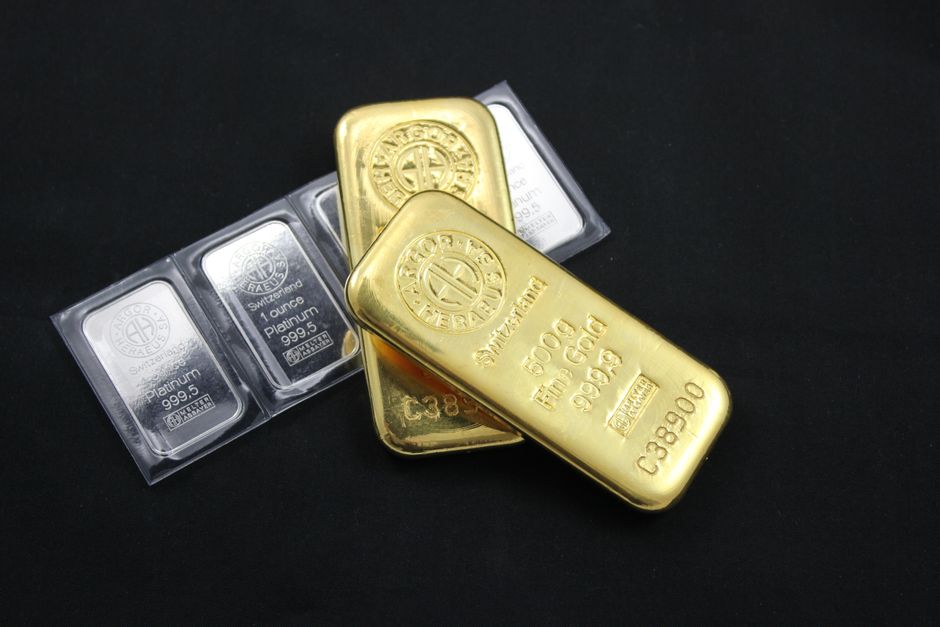
Gold does not move on vibes. It moves on real yields, the dollar, central-bank demand, and fear. Here is how each one shows up on your chart, and why reading the trend beats guessing the headline.
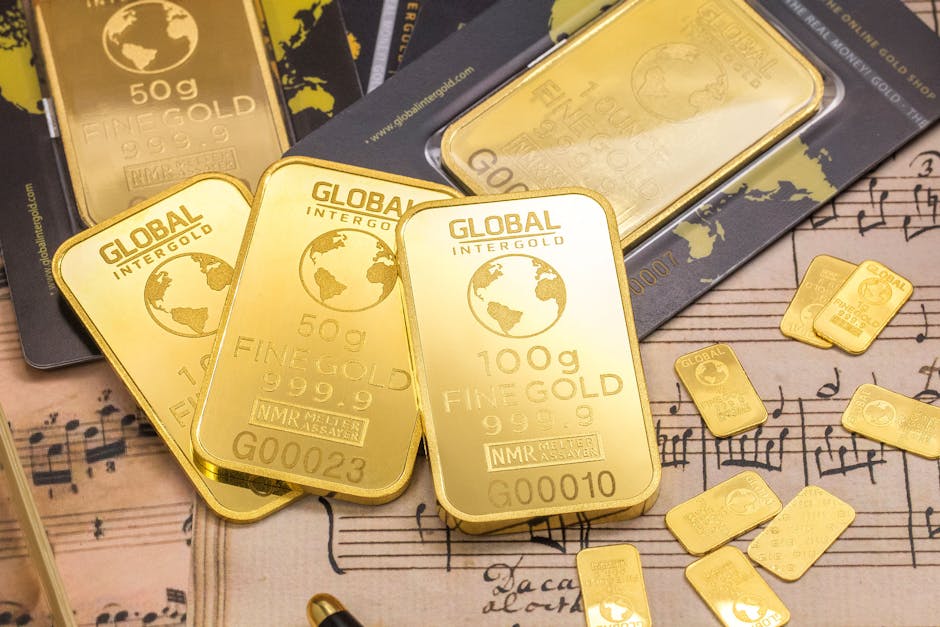
Chasing candles and reacting to headlines gets gold traders wrong-footed. A confirmed daily break gives you a rule you can repeat instead of a hunch you have to defend.