
Why Central Banks Buy Gold (and Why It Matters to Traders)
Reserve diversification, de-dollarisation, and the steady official demand that quietly sits under gold's price. The macro context a trader should actually know.
The chain from rate decisions to real yields to gold, and why the surprise moves the price more than the decision itself.

If you want to understand how the Fed affects gold prices, start with what the Fed actually does, which is less than most headlines suggest. The Federal Reserve sets one short-term interest rate. It does not set the gold price, it does not buy or sell gold to steer it, and it has no gold dial in a back room. What it has is influence over the two things gold genuinely cares about: real yields and the dollar. Everything else is transmission.
The frustrating part, and the useful part, is that gold often makes its biggest move before the decision is even announced, and then does the opposite of what a beginner would guess when the announcement lands. That is not gold being irrational. That is gold trading the surprise instead of the headline. Once you see that, a lot of confusing price action starts to make sense.
The Fed changes gold in steps, not all at once. Here is the chain.
Step one: the Fed moves the policy rate. This is the federal funds rate, the overnight rate banks charge each other. It is the only thing the Fed directly controls.
Step two: that rate ripples into bond yields. Short-term Treasury yields track the policy rate closely. Longer yields depend more on where the market thinks rates are heading, which is why the Fed's words often matter more than its actions.
Step three: nominal yields become real yields. Subtract expected inflation from a nominal yield and you get the real yield, the return you actually keep after inflation eats its share. This is the number gold watches most.
Step four: real yields and the dollar set the tone for gold. Gold pays you nothing. No coupon, no dividend, no interest. So when real yields are high, the opportunity cost of parking money in a metal that just sits there goes up, and gold tends to face a headwind. When real yields fall, that cost shrinks and gold usually breathes easier. The dollar rides alongside: tighter Fed policy often lifts the dollar, and since gold is priced in dollars, a stronger dollar is one more drag. If you want the currency side in depth, we cover it in how the DXY affects gold.
So the honest one-line answer to "does the Fed control the gold price" is: no, but it moves the two dials that gold is most sensitive to. The Fed is upstream. Gold is downstream, reacting to the water that arrives.
Here is the part that trips people up. Markets are forward-looking. By the time the Fed announces a decision, the desks that trade this for a living have already positioned for the most likely outcome. The expected move is baked in. Priced. Old news the moment it is confirmed.
What actually moves gold is the gap between what the market expected and what it got. Economists call this the surprise component. A hike that everyone saw coming can leave gold flat or even push it higher, because the real news was the tone, the dot plot, or a single sentence in the press conference that hinted the Fed is closer to done than people thought.
That is why you will see gold rally on a rate hike and sell off on a pause. It looks backwards until you remember the question is never "what did the Fed do," it is "what did the Fed do versus what we already assumed." The decision is the answer to a test the market already guessed. Only the difference between the guess and the answer carries new information, and only new information moves price.
This is also why the move often front-runs the meeting. In the days before an FOMC decision, expectations shift as data comes in and officials give speeches. Gold drifts with those shifting expectations. By announcement day, a chunk of the move may already be behind us. Trying to time your entry to the exact minute of the release means fighting for the smallest, noisiest slice of the whole cycle.
No table replaces judgment, but this captures the logic most of the time.
| What the Fed does | What the market expected | Typical gold lean |
|---|---|---|
| Hikes rates | An even bigger hike, hawkish tone | Can rise (less hawkish than feared) |
| Hikes rates | Exactly this, dovish forward tone | Often flat to up on the outlook |
| Holds steady | A cut was hoped for | Can fall (disappointment) |
| Cuts rates | The cut plus dovish signals | Often supportive, if not already priced |
| Cuts rates | A larger cut | Can fall (less dovish than hoped) |
Notice that the Fed's action alone never fills a row. You always need the expectation column. That is the whole point. Anyone who tells you "the Fed cut, so gold goes up" is skipping the only part that decides the outcome.
Gold's old reputation as an inflation hedge is real but often oversold in the short run. What matters is not inflation on its own, it is inflation relative to nominal yields, which is just real yields again. If inflation runs hot but the Fed hikes fast enough that real yields still climb, gold can struggle even while prices rise. If inflation runs hot and the Fed lags, real yields fall and gold usually likes that.
The cleaner mental model: gold does not care about inflation or rates in isolation. It cares about the difference between them. We go deeper on this in does inflation drive the gold price, and on the broader set of forces in what moves the price of gold.
Here is the practical takeaway, and it is not a comfortable one. If the move happens on the surprise, and the surprise is by definition the thing nobody knew in advance, then trading the Fed headline is trading something you cannot forecast. You are guessing what a room of professionals will collectively find surprising, then guessing how a jittery market will interpret it in the first thirty seconds. Spreads widen. Price whips both directions before settling. Plenty of traders get the direction right and still lose because they were early, late, or stopped out by the noise.
The alternative is to stop trying to predict the announcement and instead react to what price does after it. A trend read does not need to know what the Fed will say. It waits, lets the market digest the news, and follows the direction that actually emerges. It is not smarter than the Fed. It just refuses to bet on the one thing that is genuinely unknowable, and acts on the thing that is observable: the trend that forms once the dust settles.
That is the whole idea behind trend following. You give up the fantasy of calling the turn and settle for catching the direction after it declares itself. Around a Fed meeting, that means not front-running the decision and not fading the first spike, but waiting for a real trend to confirm.
This is where a tool can carry the discipline you might not have at 2pm on decision day. Vektor is a one-time TradingView indicator for gold and Bitcoin that reads the trend and says long, short, or flat, and it waits most of the time, which is exactly what you want when the tape is noise. It plots the exit as a trailing stop that follows the trend, does not repaint, and can show its result next to buy-and-hold on your own chart so you can judge it before you trust it. It is information, not financial advice, and it does not place trades for you.
One honest note: gold can move fast and against you around macro events, so size your position for the volatility, not for the outcome you are hoping for. A common rule of thumb is to risk only a small slice of your account on any single trade, roughly one percent, so no single Fed surprise can do lasting damage. More on that in risk management in trading.
No. The Fed sets a short-term interest rate. Gold responds to the knock-on effects of that rate, mainly real yields and the dollar, plus what the market expected versus what it got. There is no lever at the Fed that moves gold on its own.
Because the hike was already expected and priced in. If the market braced for a bigger hike or a more hawkish tone and got something softer, gold can rally even as rates go up. The reaction tracks the surprise relative to expectations, not the raw direction.
A real yield is the interest rate after subtracting expected inflation. Gold pays no interest, so when real yields are high, holding gold has a bigger opportunity cost and it tends to struggle. When real yields fall, that cost shrinks and gold usually finds more support.
Trading the minutes around an FOMC decision is one of the harder things to do well. Spreads widen, moves whip in both directions, and you are betting against desks that price this for a living. A trend read that reacts after the dust settles is usually the calmer path.
The concrete move: next time an FOMC meeting is on the calendar, resist the urge to place a bet on the outcome. Watch real yields and the dollar in the days ahead of it, note where expectations sit, and then let the trend after the announcement tell you where gold actually wants to go. You will miss the first spike. You will also miss most of the ways to get hurt.
Reserve diversification, de-dollarisation, and the steady official demand that quietly sits under gold's price. The macro context a trader should actually know.
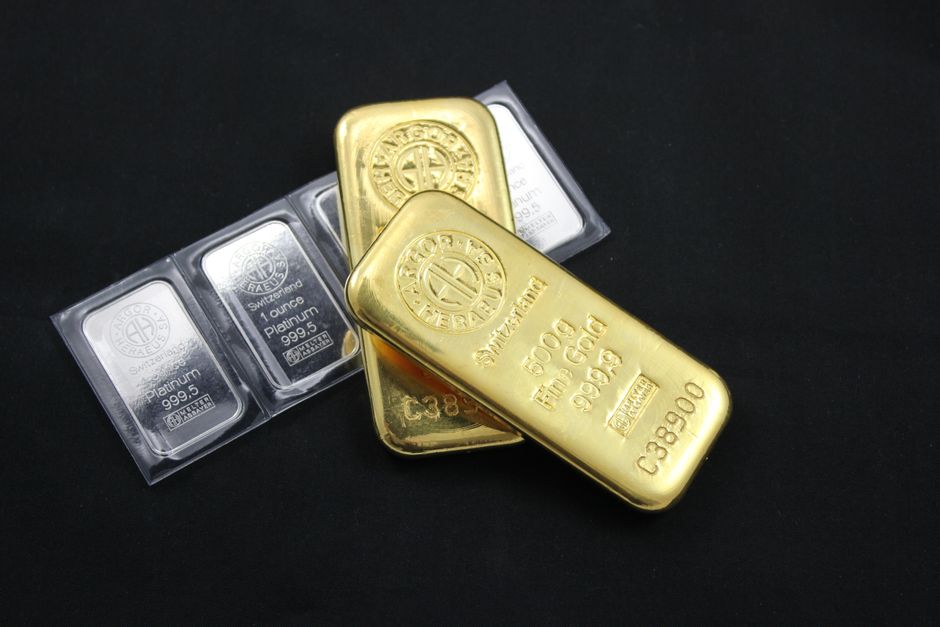
Gold does not move on vibes. It moves on real yields, the dollar, central-bank demand, and fear. Here is how each one shows up on your chart, and why reading the trend beats guessing the headline.
Gold holds purchasing power over long stretches, but it pays you nothing to wait. Here is the sober case for and against owning it.