
Why Most Traders Lose Money (And What Actually Goes Wrong)
The boring, repeatable reasons accounts blow up: overtrading, no defined risk, revenge trades, and mistaking activity for edge.
Trend following is not about being smart or seeing the future. It is a boring, mechanical bet on asymmetry. Here is how it actually works and where it breaks.
Most trading advice assumes you can see what happens next. Trend following starts from the opposite assumption: you cannot, so stop trying. That single move, giving up on prediction, is what makes it work, and it is also why so many people cannot stand to trade it. This is a trend following strategy explained without the mystique, including the parts that are genuinely hard and the conditions where it simply does not work.
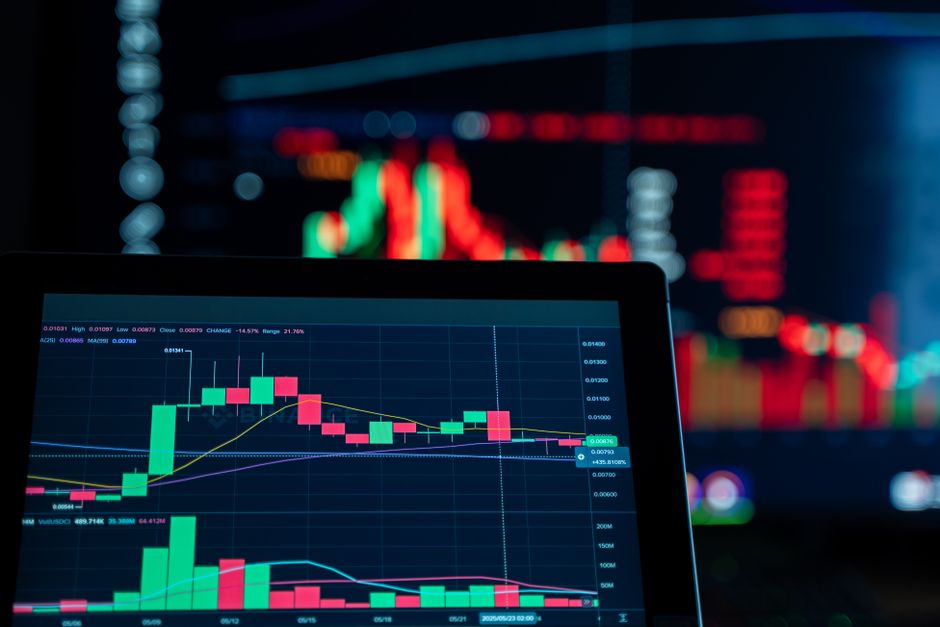
The core idea fits in one sentence. Go with the direction the market is already moving, stay in while it keeps moving, and get out when it stops. You are not forecasting. You are reacting to what is in front of you and letting the move decide how far it goes.
A forecaster looks at a chart and says where price is headed. A trend follower looks at the same chart and says which way it is already going, then goes with it until it clearly is not. The difference sounds small and is enormous. One is a bet on your ability to see the future. The other is a bet that big moves, once underway, tend to keep going longer than feels reasonable.
That is the whole worldview. You do not need to know why gold is climbing or why Bitcoin is falling. You need the trend to exist and a rule for when to admit it has ended. Everything else is noise you deliberately ignore.
Here is the part that trips people up. A trend follower loses often. Whipsaws, false starts, trends that fizzle after two days: those small losses pile up and they are supposed to. The approach is not trying to be right most of the time. It is trying to be positioned when a big move shows up, and to lose only a little the rest of the time.
The shape of returns looks roughly like this:
Miss the few big trades and the whole thing falls apart, which is exactly why cutting winners early is fatal. The winners are the entire point. You take the frequent small losses precisely so you are still in position when the rare large move arrives. That is the asymmetry: losses are capped and roughly uniform, wins are left uncapped. If that reminds you of how risk-to-reward and position sizing interact, it should, and it is the same logic seen from the other side.
"Follow the trend" is useless until you make it mechanical. A trend is not a feeling. It is a rule you can write down and a computer could check without your opinion.
There are several honest ways to define one:
The method matters less than having one and applying it the same way every time. Once the trend is defined, following it is mostly about the exit. You need a rule that keeps you in while the move continues and pulls you out when it reverses. A trailing stop does this well: it follows behind the trend, giving the move room to breathe while locking in the direction, and it makes the exit a rule instead of a nerve-wracking judgment call. If that mechanic is new to you, what is a trailing stop loss walks through it.
This is the shape Vektor takes, for what it is worth. It reads the trend on gold and Bitcoin, says long, short, or flat, and plots a trailing stop that follows the trend as your exit. It waits most of the time, which is the honest behavior of a trend follower, and it does not repaint or place trades for you. It is information you act on, not advice.
Trend following is simple to describe and miserable to sit through. Two things make it hard.
First, the boredom. A real trend follower is flat or grinding through small losses most of the time, waiting. Nothing is happening for long stretches. Human beings are terrible at doing nothing while a rule tells them to wait, so they invent reasons to trade, and those improvised trades are usually where the damage happens.
Second, the drawdowns feel wrong. You will give back a chunk of an open profit every time a trend ends, because the trailing exit only triggers after the reversal is underway. You never sell the top. You also sit through losing streaks in choppy markets that make you doubt the whole thing right before it starts working. The strategy asks you to keep doing the boring, slightly painful thing on faith that the asymmetry pays off over many trades. Most people quit during the boring part.
Be blunt about this, because it is the difference between a fair test and a frustrated one.
Trend following works when markets trend. Sustained directional moves, the kind that run for weeks or months, are what the approach exists to capture. Assets prone to long moves and momentum are its natural home.
It fails in chop and ranges. A market oscillating in a sideways band hands a trend follower a steady stream of false breakouts and whipsaws. Every apparent start reverses, each one a small loss, and there is no big win to pay for them because there is no big move. This is not a flaw to fix. It is the cost of the approach, and no version of it escapes ranging conditions cleanly.
So the honest expectation is streaky. Long flat or losing stretches in range-bound periods, punctuated by strong runs when a market finally commits to a direction. If you cannot stomach the flat stretches, the strong runs are not yours to collect.
You do not need anything exotic to see how this behaves. A basic version:
Do not trust a framework you have not examined on real history. Whether you build it yourself or use a tool, look at how it behaves across trending and ranging periods before you risk anything. On the question of whether packaged signals are worth leaning on at all, do trading signals work is an honest starting point, and if you want a trend example on a specific asset, bitcoin trend trading strategy walks through one.
Here is the takeaway to hold onto. Trend following does not make you smart, fast, or right. It makes you patient and consistent, and it pays you for asymmetry: small losses many times over, redeemed by the occasional large win you were positioned to catch. Predict nothing, cut losers fast, let winners run, and accept the boredom as the price of admission. That is the entire strategy, and its difficulty is the reason it still works.
It is a way of trading that goes with the direction a market is already moving rather than trying to call tops and bottoms. You get in once a trend is established, stay in while it continues, and get out when it turns. No forecast is involved.
Because it takes many small losses in choppy conditions and waits for the occasional large move. The edge is asymmetry, not accuracy. A minority of trades produce most of the gains, and the frequent small losers are the cost of staying positioned for them.
No. It needs markets that actually trend. In sideways, range-bound conditions it gets chopped up by false starts. The approach does not remove risk or guarantee anything; it simply positions you to capture sustained moves when they happen.
The boring, repeatable reasons accounts blow up: overtrading, no defined risk, revenge trades, and mistaking activity for edge.

Why these zones form, how to draw them as areas instead of exact lines, and why they break more often than beginners expect.
Win rate gets all the attention. Risk-reward is what actually pays the bills. Here is how the two work together, and why a strategy that loses more often than it wins can still make money.