
Why Central Banks Buy Gold (and Why It Matters to Traders)
Reserve diversification, de-dollarisation, and the steady official demand that quietly sits under gold's price. The macro context a trader should actually know.
One asset has 5,000 years of history. The other has fifteen and a habit of falling 70% on a bad quarter. Here is the sober side-by-side.

The safe-haven label gets thrown around like it means something fixed. It does not. A safe haven is just an asset people run to when they are scared, and whether something earns that name is settled by decades of behavior, not by a pitch deck. So when you line up gold vs Bitcoin as a safe haven, you are really comparing two very different resumes. One is thick and boring. The other is thin and dramatic.
Both get sold as protection against the same fears: currency debasement, government overreach, the slow bleed of inflation. Both are scarce and neither answers to a central bank. That is where the similarity stops and the honest part begins.
The whole point of a safe haven is that it zigs when your other stuff zags. Stocks crater, and the haven holds steady or climbs, so your portfolio does not go down in a straight line. That is the job. Not maximum returns, not excitement. Just not falling apart at the exact moment everything else does.
Gold has done that job, imperfectly, for a very long time. It has held purchasing power through wars, hyperinflations, and the quiet erosion of a dozen currencies. It does not pay a dividend, it can sit dead for years, and it will disappoint anyone expecting it to double. But when trust in paper money cracks, gold has repeatedly been where money hides.
Bitcoin's claim to the same job is younger and shakier. It was born in 2009, out of the last financial crisis, explicitly as an alternative to a banking system people had stopped trusting. That origin story is genuinely part of the appeal. The problem is that a good origin story is not the same as fifteen years of steady behavior under stress.
Gold's case is almost dull, and that is the strength. Humans have treated it as money for thousands of years across cultures that never spoke to each other. It is physically scarce, hard to fake, and does not corrode. Central banks still hold enormous piles of it, which tells you something about what the people who print money actually trust. If you want the deeper version of why they hoard it, why central banks buy gold covers the reasoning.
Gold also has real drivers you can study. It tends to move with real interest rates, the strength of the dollar, and inflation expectations. None of that is mystical. What moves the price of gold walks through the main forces, and how the DXY affects gold covers the dollar link specifically. The point is that gold is legible. You can build a mental model of when it should catch a bid.
The honest knock on gold: it can be a lousy short-term trade and a frustrating long-term hold. It does nothing productive. In a raging bull market for stocks, it just sits there looking useless. Safe haven does not mean high return. It means low correlation to your panic.
Bitcoin's supply is capped at 21 million coins by code, and that hard cap is the core of the "digital gold" pitch. Scarcity you can verify, money no government can inflate away. On paper it is a clean story. The bitcoin halving reinforces it by cutting new supply on a schedule everyone can see coming.
Here is the part the pitch skips. Bitcoin is wildly volatile. It has lost more than 70% of its value multiple times, and not over years, over months. An asset that can cut in half while you are on vacation is a strange thing to call a haven. Worse for the thesis, in several real panics Bitcoin sold off hard right alongside stocks, exactly when a haven is supposed to hold. It has behaved more like leveraged tech than like a life raft.
That does not make it worthless. It makes it a different animal. Bitcoin is an asymmetric bet: small allocations, huge potential swings in both directions, a long-term thesis that it grows into the safe-haven role as it matures and more capital treats it that way. That is a reasonable position to hold. It is just a bet on the future, not a description of the past.
| Gold | Bitcoin | |
|---|---|---|
| Track record as store of value | Millennia | ~15 years |
| Typical volatility | Low to moderate | Very high |
| Behavior in past panics | Often holds or rises | Mixed, sometimes crashes with stocks |
| Scarcity | Geological | Capped at 21M by code |
| Central bank ownership | Large | None |
| Yield | None | None |
| Main risk | Long dead stretches, no growth | Deep drawdowns, thesis unproven |
Read that table honestly and the picture is not "one wins." It is that they are protecting against similar fears with completely different risk profiles. Gold is the anchor. Bitcoin is the swing.
In practice, plenty of investors hold both and stop pretending they are the same trade. Gold is the conservative slice you barely touch. Bitcoin is the volatile slice you size small enough that a 70% drawdown does not wreck you or your sleep. If you own both, the sizing should come from how much volatility you can genuinely tolerate, not from which narrative sounds more convincing at 2am.
And whichever one you trade, the swings are the whole game. Gold can trend for months and then chop sideways for a year. Bitcoin can triple and then give most of it back. Sitting through that without a plan is how people turn a decent thesis into a bad outcome. This is where risk management in trading stops being a cliche and starts being the thing that keeps you solvent. A common rule of thumb is risking only around 1% of your account on any single position, so no one trade can take you out. It is a guideline, not a guarantee, but it beats winging it.
We did not pick gold and Bitcoin at random. They are the two markets Vektor is built for, precisely because they are the two ends of this safe-haven argument: the ancient anchor and the volatile newcomer. Both trend hard, both punish indecision, and both reward staying on the right side of the move instead of guessing tops and bottoms.
Vektor reads the trend on XAU/USD and Bitcoin and tells you long, short, or flat, and it waits most of the time rather than forcing trades. It plots the exit as a trailing stop that follows the trend so you are not eyeballing where to get out, it does not repaint, and it can show its result next to buy-and-hold right on your chart so you can judge it honestly instead of taking our word for it. It is information, not financial advice, and it does not place trades for you.
If you want to pressure-test any approach on these two markets before risking a cent, how to backtest a strategy on TradingView is the honest first step, and it works whether you use a tool or trade by hand.
Gold earned the safe-haven label the slow way, over centuries of holding value when confidence in money fell apart. Bitcoin is trying to earn it in real time, with a hard supply cap and a big narrative but a short, jagged history that includes selling off exactly when a haven should not. Calling them the same thing is marketing. Treating gold as the anchor and Bitcoin as the high-variance bet is closer to how they actually behave.
So do not ask which one is the safe haven. Ask how much of your money you want in the asset with 5,000 years of receipts versus the one still writing its first chapter, and size each so the answer does not have to be perfect.
Reserve diversification, de-dollarisation, and the steady official demand that quietly sits under gold's price. The macro context a trader should actually know.
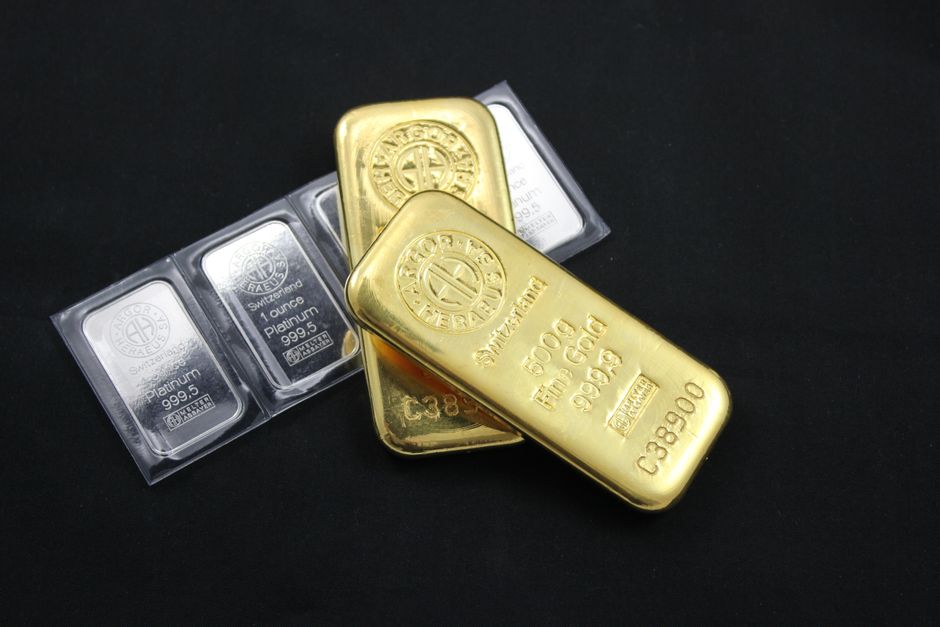
Gold does not move on vibes. It moves on real yields, the dollar, central-bank demand, and fear. Here is how each one shows up on your chart, and why reading the trend beats guessing the headline.
Gold holds purchasing power over long stretches, but it pays you nothing to wait. Here is the sober case for and against owning it.