
What Is Bitcoin Dominance and Why It Matters
The BTC dominance metric, what rising and falling readings actually tell you, and why it is a lousy stopwatch for calling altcoin season.
You will never nail the exact top, and chasing it is how good trades turn into bad ones. Here is how rule-based exits keep the decision out of your hands.

Most traders do not lose on the entry. They lose on the exit. They get the direction right, watch a position go nicely green, and then hand the whole thing back because they had no plan for getting out. Deciding when to take profit on Bitcoin by feel, in the moment, with money on the line, is close to the worst possible way to make the call.
The honest truth is that you will never sell the top. Not consistently, not on purpose. Anyone who tells you they do is either lying or got lucky once and is still talking about it. So the goal is not to nail the high. The goal is to have a rule that gets you out at a sensible point and takes the decision out of your shaking hands.
When a trade is up, two feelings fight for control. One says take it now before it disappears. The other says let it run, this could be the big one. Both are loud, both are emotional, and neither is a plan. Whichever one wins on a given day depends on your mood, your sleep, and how the last trade went. That is not a strategy. That is a coin flip wearing a suit.
Bitcoin makes this worse than most markets. It moves fast, it moves at 3am, and it loves to run just far enough past your target to make you feel stupid for not holding, then reverse hard enough to make you feel stupid for not selling. If your exit lives in your head, Bitcoin will find a way to punish it.
The fix is to move the decision out of the moment and into a rule you set in advance, when you are calm and have no position. There are three rules worth knowing, and they work well together.
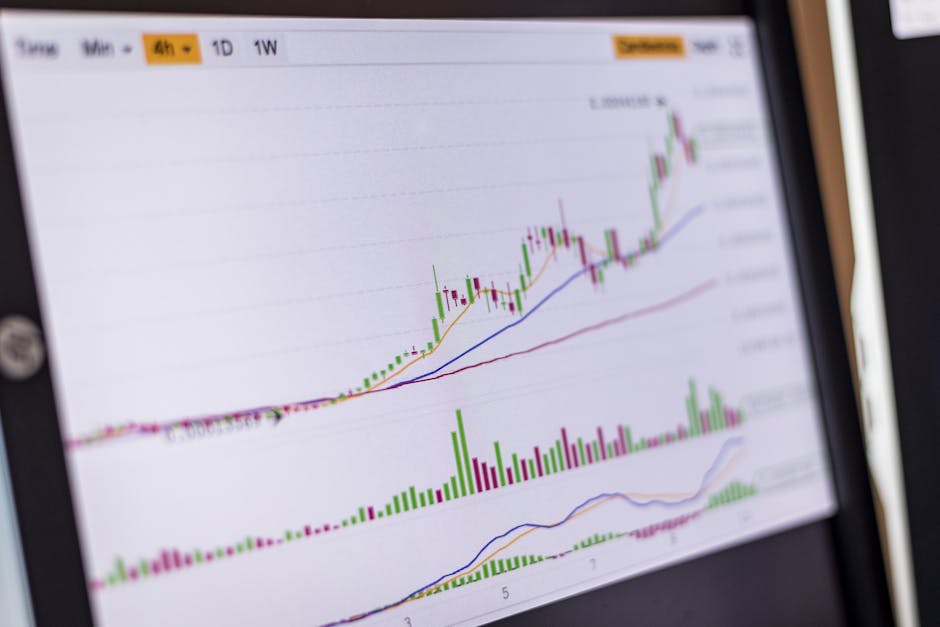
A trailing stop is a stop-loss that moves in your favor as price moves in your favor, but never moves against you. In an uptrend it ratchets up underneath price. When price finally turns and hits it, you are out. It is the closest thing to an automatic "ride the trend, exit on reversal" system that exists.
The appeal is that it answers the top question for you. You stop asking "is this the top?" and start asking "has my stop been hit?" One is an opinion. The other is a fact on the chart. If you want the mechanics in detail, we cover them in what is a trailing stop loss, but the core idea is simple: you accept giving back a slice of the move at the end in exchange for staying in for the whole middle of it.
The hard part is width. Too tight and normal Bitcoin volatility knocks you out on the first wick. Too wide and you give back more than you are comfortable with. A common approach is to base the stop distance on recent volatility rather than a fixed dollar amount, so the stop breathes with the market. The ATR indicator is the usual tool for that, since it measures how much the asset actually moves.
This is where a good tool earns its keep. Rather than eyeballing where to drag a stop, an indicator can plot a trailing exit that follows the trend and updates every bar, so the line is on the chart and you just follow it. That removes the temptation to fiddle.
Structure is just the pattern of highs and lows. In an uptrend, price makes higher highs and higher lows. As long as that holds, the trend is intact and you have no reason to sell. The trend is over when it stops: when price breaks below a prior swing low that it should have held.
This gives you a clean, non-emotional exit trigger. Pick the swing low that matters, and if price closes below it, you are out. Not on a wick, not on a single red candle, on a close below the level. A red candle is noise. A closed break of structure is information. Learning to tell the two apart is most of the game, and support and resistance is the foundation for reading it.
Structure-based exits pair naturally with trend trading. If your whole thesis is "I am long because the trend is up," then the logical exit is "I am out because the trend broke." It keeps your reason for leaving tied to your reason for entering, which is more than most traders can say. Our bitcoin trend trading strategy piece goes deeper on building the whole trade around that logic.
Partial exits are the middle path. Instead of all-in or all-out, you take some profit at a defined point and let the rest ride on a trailing stop or structure. A common version: sell a portion at a target that gives you a decent risk-reward, then trail the remainder.
Be honest about what scaling out is for. It does not improve your expected return in any mechanical sense. What it does is manage your psychology. Booking a real gain early makes it far easier to hold the rest without panic, because the trade is already a winner no matter what happens next. For a lot of people, that emotional relief is the difference between following the plan and blowing it up.
Here is a plain comparison of the three approaches:
| Method | Best for | The trade-off |
|---|---|---|
| Trailing stop | Catching the full trend | Always gives back some of the top |
| Structure break | Trend traders who want clean rules | Can be slow to trigger on sharp reversals |
| Scaling out | Managing your own nerves | Caps upside on the portion you sell early |
None of these is the "right" one. The right one is the one you will actually follow at 3am when Bitcoin is doing something insane. Discipline beats optimization, and why most traders lose money usually comes down to abandoning a fine plan rather than picking the wrong one.
The common thread across all three is that the decision is made before you are in the trade, and the trigger lives on the chart where you can see it. That is deliberate. The moment your exit depends on how you feel while staring at a live P&L, you have lost.
This is squarely what Vektor is built to help with. It reads the trend on gold and Bitcoin, tells you long, short, or flat, and plots the exit as a trailing stop that follows the trend and does not repaint, so the line you see now is the line that was always there. It sends a phone alert when the exit triggers, which means you do not have to sit and watch, and it can show its result next to buy-and-hold on your chart so you can judge whether the approach is doing anything for you before you trust it. It does not place trades and it is not financial advice. It is a rule, made visible, that you can follow instead of arguing with yourself.
Risk note: exits limit damage, they do not remove it. A stop can be skipped in a fast, gappy move, and no exit method turns a bad position into a good one. Size your positions so any single trade cannot hurt you, and treat risking around 1% of your account per trade as a common rule of thumb, not a guarantee. There is more on that in risk management in trading.
Both work, and it depends on why you are in the trade. Trend-following favors a trailing stop that exits on a structure break so you stay in the big moves. If you want to reduce stress, scaling out in pieces is reasonable. What does not work is having no plan and deciding mid-candle. Pick a method before you enter.
You usually cannot tell in real time, and that is the point. Instead of predicting, react. Define ahead of time what would prove the trend is over, such as a close below the prior swing low or a break of your trailing stop. If that level breaks, you exit. If it holds, you stay.
Selling before the top is not a mistake if it followed your rules. Nobody sells the exact high except by accident. A trailing stop is designed to give back a slice of the move in exchange for staying in the trend. Chasing price back in on emotion is where the real damage happens.
Manage the exit on the same time frame you used to enter. If you took the trade off the daily chart, a two-hour wick is noise, not a signal. Zooming into a lower time frame to babysit a higher time frame trade is one of the fastest ways to get shaken out early.
The BTC dominance metric, what rising and falling readings actually tell you, and why it is a lousy stopwatch for calling altcoin season.

How a spot ETF differs from futures products and holding your own coins, and why the money flowing in and out actually matters for price.
A concrete framework for riding Bitcoin moves: enter on daily breakouts, ignore the intraday noise, and trail the winner instead of scalping.