When to Take Profit on Bitcoin: Rules That Beat Gut Feel
You will never nail the exact top, and chasing it is how good trades turn into bad ones. Here is how rule-based exits keep the decision out of your hands.
Spot versus derivatives, one timeframe, small size, and the four traps that empty beginner accounts. A calm walkthrough with no hype.
Most people lose money in their first months of Bitcoin trading for boring reasons. Not because they missed a secret pattern, but because they used too much size, chased a green candle, and had no plan for being wrong. Learning how to trade Bitcoin for beginners is mostly about not doing those things.
This guide skips the fantasy. No promise of a system that prints money. Just the mechanics, in plain terms, and the traps that quietly drain accounts.
There are two broad ways to trade Bitcoin, and the difference matters more than any indicator.
Spot means you buy the actual coin. Pay $500, own $500 of Bitcoin. If it drops 20 percent, you are down 20 percent. Unpleasant, but survivable. You cannot be liquidated because you never borrowed anything.
Derivatives (futures, perpetuals, options) let you control a larger position than your cash. This is leverage. At 10x, a 10 percent move against you can wipe the position entirely. The exchange closes you out and keeps your margin. The math is not on your side when you are still learning.
Here is the honest version: leverage does not make you a better trader. It makes every mistake faster and more expensive. A beginner on 20x is not trading, they are feeding a slot machine with extra steps. Start on spot. If you never touch heavy leverage, you will have skipped the single most common way new traders blow up.
Bitcoin is volatile. Double digit daily moves happen. Only trade money you can afford to lose entirely.
Before any chart, you need somewhere reputable to place the trade. A few plain filters:
You do not need the exchange with the most features. You need one that will still be there next year and will let you withdraw your money without a fight.
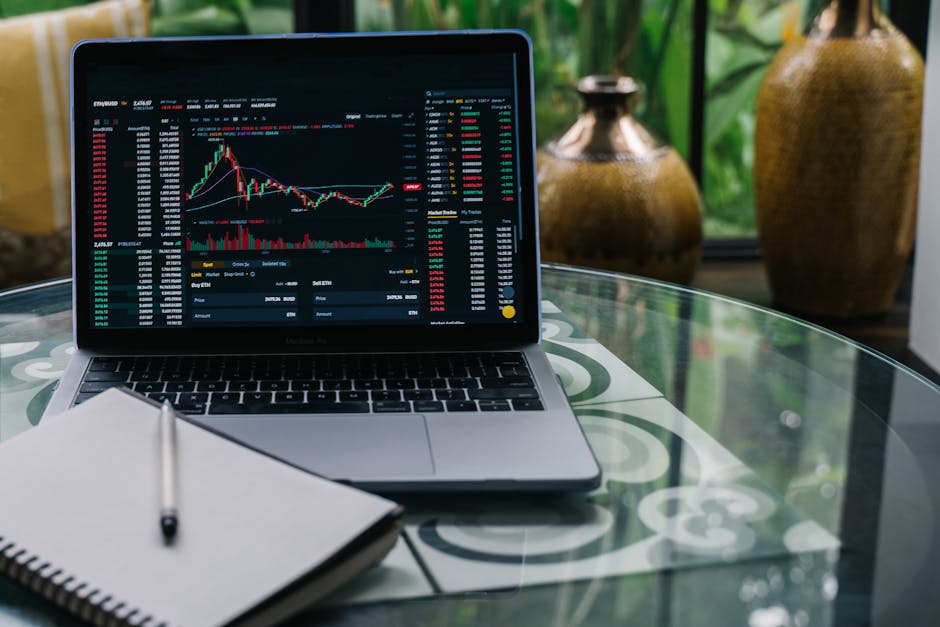
Open a Bitcoin chart and it can look like a wall of noise. Strip it down.
Each candle shows four things for a period: where price opened, closed, and its high and low. Green closed up, red closed down. That is the whole vocabulary you need to start.
You are looking for one thing above all: direction. Is price making higher highs and higher lows over time? That is an uptrend. Lower highs and lower lows? Downtrend. Chopping sideways in a range? That is most of the time, honestly, and it is where overtrading does its damage.
You do not need twelve indicators stacked on top of each other. You need to answer one question: which way is this thing generally pointing. If you want to go deeper on defining that, the bitcoin trend trading strategy guide is the natural next read.
Beginners love to flick between the 5-minute, the 1-hour, and the daily, finding a different story on each. That is a recipe for confusion.
Pick one timeframe and commit for a while. A higher timeframe, like the daily, gives you fewer signals and less noise, which is exactly what you want when your discipline is still forming. Fewer decisions means fewer chances to do something dumb.
The timeframe you choose defines your whole rhythm: how often you check, how wide your stop sits, how long a trade lasts. Changing it mid-trade because you do not like what you see is just moving the goalposts.
Most beginners try to be clever. They short a screaming uptrend because it "has to pull back," or they catch a falling knife because it "has to bounce." Both are ego dressed up as analysis.
The simpler path is to define the trend with a rule, then only take trades that agree with it. Long in an uptrend. Flat or short in a downtrend. Nothing in the chop. A rule you can state out loud beats a feeling you cannot.
This is exactly the lane Vektor works in. It reads the trend on gold and Bitcoin and tells you long, short, or flat, and it plots the exit as a trailing stop that follows the move. It does not place trades and it is not advice, but it does turn "which way is this pointing" into something you can see rather than argue about. On the daily especially, that removes a lot of the second-guessing that sinks beginners.
| Step | What you do |
|---|---|
| 1. Trend | Decide the direction with a rule, not a mood |
| 2. Direction | Only take trades that agree with that trend |
| 3. Size | Risk a small, fixed fraction per trade |
| 4. Stop | Know your exit before you enter |
| 5. Wait | Do nothing when there is no clear setup |
Here is where accounts are actually saved or lost. Not entries. Sizing.
If you risk a huge chunk of your account on one trade, you only need one bad run to be done. If you risk a small, fixed fraction each time, a losing streak is a dent, not a funeral. The whole point is to still be in the game after being wrong several times, because you will be wrong several times.
A stop-loss is part of this. Before you enter, you decide the price where you admit the idea failed, and you place the order. No stop means no plan, just hope. If the mechanics of stops and sizing are new to you, spend real time in risk management in trading before you spend real money.
Almost every early blowup is one of these four. Learn to spot them in yourself.
Notice these are all emotional, not technical. That is the point. The market does not empty beginner accounts. Beginners do, by reacting instead of following a plan.
If you take one thing from this, take that. A written rule you follow beats a clever feeling you act on in the moment. Feelings tell you to buy the top and revenge the loss. Rules tell you to wait.
Good trading is mostly waiting, then acting small and decisively when your rule says so. If you want a nudge to actually act on your triggers instead of watching the screen all day, learning how to set up TradingView alerts is a practical next step, and figuring out how to know when to buy Bitcoin pairs naturally with everything here.
Start on spot. Pick one timeframe. Define the trend with a rule. Size small. Set the stop before you enter. Then, most of the time, do nothing. That is not exciting, and that is exactly why it works.
You will never nail the exact top, and chasing it is how good trades turn into bad ones. Here is how rule-based exits keep the decision out of your hands.

The BTC dominance metric, what rising and falling readings actually tell you, and why it is a lousy stopwatch for calling altcoin season.

How a spot ETF differs from futures products and holding your own coins, and why the money flowing in and out actually matters for price.