
Why Most Traders Lose Money (And What Actually Goes Wrong)
The boring, repeatable reasons accounts blow up: overtrading, no defined risk, revenge trades, and mistaking activity for edge.
Willpower runs out. Rules don't. Concrete habits that take the decision out of your hands at the exact moment you'd blow it.
You already know what you should do. Cut the loser, let the winner run, size small, walk away when you are tilted. Nobody loses money because they never heard the advice. They lose because in the exact second it matters, the calm, sensible plan gets overruled by a stressed animal that wants the pain to stop right now.
That is the whole problem with most trading discipline and psychology tips: they assume you can talk yourself out of a panic while the panic is happening. You cannot, reliably. Willpower is a battery that drains, and it drains fastest under stress, which is precisely when you need it. So the goal is not to become a monk. The goal is to build structure that makes the disciplined choice the default, so the stressed version of you has nothing left to decide.
Here are the habits that actually do that.
The single most important moment in a trade is before it starts, when you have no money on the line and your judgment is clean. That is when you should decide where you are wrong and where you get out.
Write the stop and the target down, or better, place them as real orders the moment you enter. A stop that lives in your head is not a stop, it is a suggestion you will negotiate with the instant price approaches it. The point of a pre-set exit is that it takes the decision away from the person least qualified to make it: you, mid-trade, watching red.
If you are not sure how to place one that actually protects you, how to set a stop loss and what is a trailing stop loss are the mechanics worth getting right first.
Vague rules get bent. "Only trade good setups" means nothing at 2pm when you are bored and every squiggle looks like a setup. "Enter only when price is above the 200-day average and the trend has flipped long" cannot be argued with. It is either true or it is not.
Write your rules so a stranger could apply them without asking you a single question. The more numeric and binary they are, the less room your feelings have to sneak in. This is also why a lot of people lean on a mechanical trend read: it turns a fuzzy judgment call into a plain long, short, or flat, so the argument is over before it starts.
A short, brutal checklist beats a long philosophy. Something like:
If any answer is wrong, there is no trade. No exceptions, because the whole value of a rule is that it holds on the day you most want to break it.
Most blowups are not one bad trade. They are one bad trade sized like three good ones because you "felt sure." Certainty is not a position-sizing input. Risk is.
A common rule of thumb is to risk something small and fixed, often around 1% of your account, on any single trade. Treat that as a guideline, not a promise, and adjust it to your own tolerance. The important part is that it is fixed in advance so conviction never touches the size. When you feel most sure is exactly when oversizing does the most damage.
Once risk per trade is a constant, your stop distance decides your size automatically. The math is boring, which is the point. How to size a position in trading and risk management in trading cover the arithmetic so you are not doing it by vibe.
This is the trick almost nobody uses, and it works better than any mindset advice. If a behavior keeps costing you, do not resolve to stop it. Make it physically harder to do.
Revenge trading after a loss? Rule: no new position for 30 minutes after a stop-out, timer on your phone, non-negotiable. Overtrading out of boredom? Rule: a hard cap on trades per day, and when you hit it, the platform closes. Chasing a candle that already ran? Rule: you may only enter on a limit order at a level you set in advance, never at market in the heat of the move.
Friction beats willpower because it does not rely on you being strong in the bad moment. It relies on a decision you already made in a good one. How to avoid overtrading goes deeper on the boredom trap specifically, which is where most accounts quietly bleed out.
The honest scoreboard is not your P&L. It is whether you followed your plan. A good trade you took by the rules that happened to lose is a win for the process. A lucky win you got by ignoring your stop is a loss you have not been billed for yet.
So log the decision, not just the outcome. Did I follow the rule? Was the size right? What did I feel and did I act on it? Over a few weeks the pattern jumps out, and it is almost never the market's fault. It is the same three mistakes on repeat, and now you can see them. How to keep a trading journal has a format you can copy so you actually stick with it.
Treat trading as two jobs done by two different people who happen to share your body. The planner works when the market is closed or quiet: sets the rules, defines the setups, writes the checklist. The executor works when the market is live and has exactly one duty, which is to follow the planner's instructions and add nothing.
The executor is not allowed to have new ideas. The moment you find yourself inventing a fresh reason to hold a losing trade or to enter something that was not on the plan, that is the executor trying to become the planner mid-battle, and that person is not thinking clearly. Send it back to the planner for next session.
This sounds like a mind game because it is one, but it maps onto a real discipline: build the system when calm, run the system when live, review the system when calm again. Never redesign it while it is running.
Be honest about the limit here. No indicator, no alert, no piece of software fixes psychology. What structure and tooling can do is narrow the number of decisions you make under stress. A clear trend read means less arguing about direction. A phone alert means you do not have to sit and stare at the screen, which is where a lot of impulsive trades are born. A visible, non-repainting exit level means the plan is already on the chart instead of in your anxious head.
That is the honest ceiling. A tool can hand you a cleaner decision and get out of your way. It cannot press the button for you or stop you from overriding your own stop. That part is structure, and structure is built by you. Vektor, the gold and Bitcoin indicator we make, is deliberately a read-and-alert tool for exactly this reason: it can remove ambiguity, but it will never claim to fix the human holding the mouse.
If you want to understand why the human is usually the weak link in the first place, why most traders lose money is the uncomfortable companion piece to this one.
No. A tool can remove ambiguity about what the market is doing, which cuts down on second-guessing, but it cannot make you follow the plan. If you ignore your own stop, no software stops you. Psychology gets fixed by structure and consequences, not by a better line on the chart.
Usually because the rules live in your head instead of on paper, and because breaking them has no cost. Write them down, define them so they cannot be argued with in the moment, and add friction to the actions that hurt you, like requiring a cooling-off period after a loss.
Decide your exit before you enter, and set it as an actual order rather than a mental note. The plan you make when you have no money on the line is almost always better than the one you improvise while a trade moves against you.
Make the next trade physically harder to place. A rule like no new position for 30 minutes after a stopped-out trade, or a hard daily loss limit that closes the platform, works far better than telling yourself to calm down.
Stop trying to be disciplined. Discipline as a feeling is unreliable and it fails on your worst day. Instead, spend your calm hours building rules so specific and so backed by friction that the stressed version of you cannot break them without real effort. Trading is risky and none of this removes the risk, but the traders who last are not the ones with the strongest willpower. They are the ones who arranged things so they never had to use much of it.
The boring, repeatable reasons accounts blow up: overtrading, no defined risk, revenge trades, and mistaking activity for edge.

Why these zones form, how to draw them as areas instead of exact lines, and why they break more often than beginners expect.
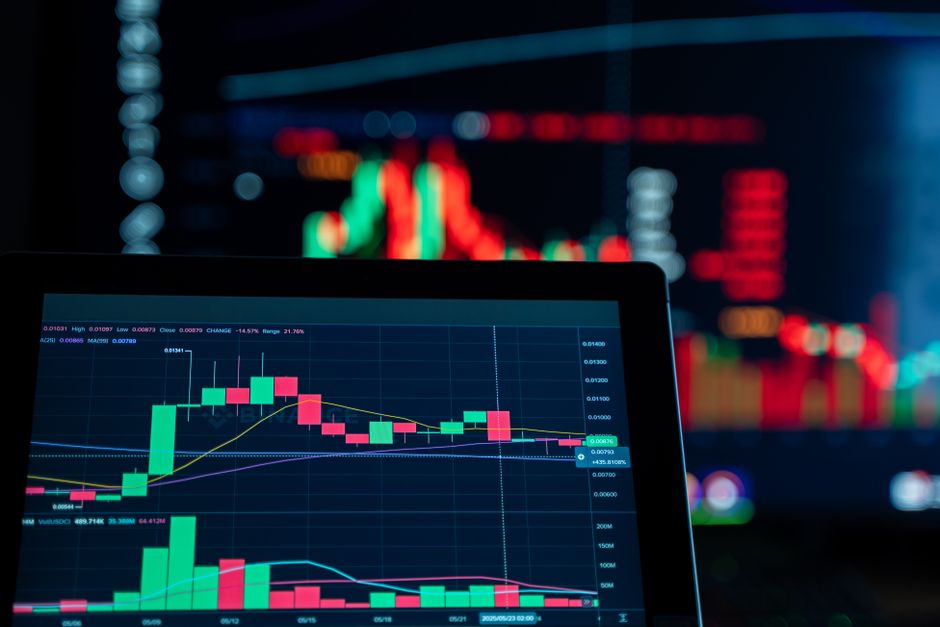
Win rate gets all the attention. Risk-reward is what actually pays the bills. Here is how the two work together, and why a strategy that loses more often than it wins can still make money.